


Магнит: акции и доставка
3.3317.00 Reviews
App Specs
- Version
- 8.118.0
- Updated On
- License
- Free
- Downloads
- 50,000,000+
- Developer
- АО Тандер
- Categories
- Food & Drink
- Platform
- Android, iOS
Screenshots
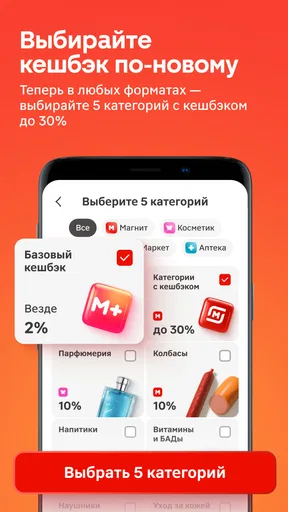
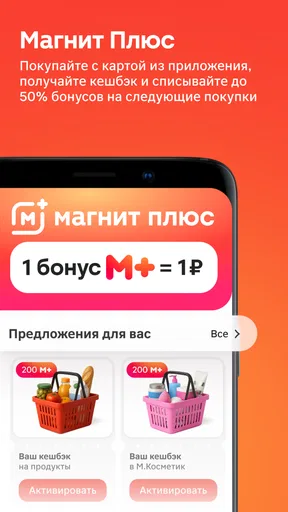
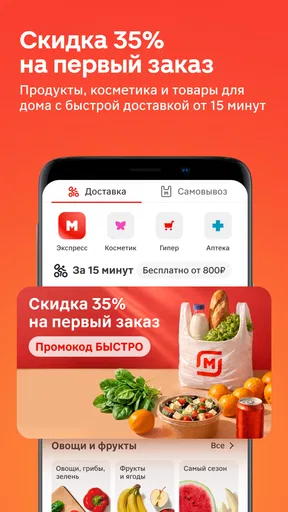
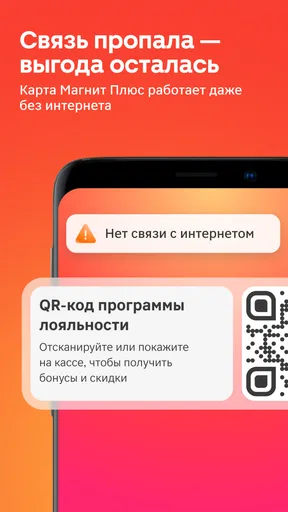

 Analysis by AppCompare
I found Магнит: акции и доставка most useful when I treated it as a practical shopping companion rather than just a digital loyalty card. It brings together the Магнит card, product browsing, delivery, promotions, bonuses for purchases, and discount coupons in one Food & Drink app. That combination can save time during an ordinary grocery run, although it also means the app feels busier than a simple card wallet.
The app is free, aimed at everyone, and developed by АО Тандер. It has been available since June 2014, so this is an established service rather than a new experiment. Its popularity is substantial: the Android listing shows over 50 million installs and an average score of 3.3 from around 1.5 million ratings. I would read those figures as a sign of broad everyday use, but not as proof that every shopping session will feel smooth on every phone.
How Магнит: акции и доставка feels in everyday use
I find the everyday experience easiest to judge by separating quick store tasks from longer shopping sessions: the loyalty card is most useful when I have it ready before checkout, while browsing and delivery planning deserve a little more time. That distinction also points to a practical question—what choices can I make inside the app, and where should I pause before sharing or relying on information?
Quick access is the main reason to keep it installed
My first impression is that the app is built around reducing small bits of friction. Instead of carrying a separate loyalty card, checking promotions in a leaflet, and opening another service for delivery, I can start from one place. That is especially convenient before entering a store: I can look through current offers, check whether a coupon is relevant, and bring up the card when paying.
The perceived speed is best when I am doing one simple task at a time. Opening the card or moving through familiar sections feels more direct than searching through a general shopping website. The experience becomes less predictable when I jump between promotions, the market area, and delivery. Those sections have different amounts of content to load, so the app may feel instant in one moment and more deliberate in the next.
I would not install it solely for browsing. The real benefit appears when I use it as part of a routine: check offers before shopping, activate or note what matters, then present the loyalty card at checkout. That workflow is more valuable than endlessly scrolling through every promotion.
A realistic grocery trip
Imagine I am leaving work and need dinner ingredients. On the way, I open the app to see whether the items I usually buy are included in current promotions. I then decide whether visiting a nearby Магнит makes sense or whether delivery would be more convenient. At the checkout, the digital loyalty card is the part I want immediately, so I do not need to search for a plastic card in my wallet.
Worth Reading Before You Choose

Baby Panda World Brings Quick Play to Modern Phones, but Its Game Library Feels Busy

ESPN’s Live Game View Makes Following Close Games Easier

QuizzLand Review: A Good Fit for Short Trivia Breaks, Not Every Player

Basketball Stars: Multiplayer Is Fast, but Can It Recover When Matches Go Wrong?

WEBTOON Turns Phone Updates Into a Better Reading Routine

Link to Windows Runs on Shared Habits, Not Social Feeds
The useful detail here is preparation. If I wait until the cashier asks for the card, I may be dealing with poor reception, a nearly empty battery, or an account screen that needs another step. I prefer opening the card before joining the queue. This is a small habit, but it makes the app feel much faster because the slowest part of the experience happens before the time pressure begins.
For delivery, I would build the basket earlier rather than expecting to complete a large order in a hurry. Product browsing and basket management naturally involve more screens and more loading than showing a card. Starting at home also gives me time to review substitutions, quantities, and the final selection instead of making decisions while distracted.
What happens during heavier use
The demanding moments are not usually the basic loyalty-card action. They are the sessions where I browse many products, compare promotional items, move between the market and delivery areas, and repeatedly return to the basket. That kind of use can make any retail app feel heavier, particularly on an older phone or when the connection is inconsistent.
I also notice a practical trade-off in combining so many services. A focused coupon app might open more quickly because it does less. Магнит’s advantage is that I do not need several separate tools, but its broader scope can make navigation feel less immediate. If I only want to show a card, I do not need the full shopping experience around it.
My advice is to separate planning from checkout. Use the app at home to explore offers and prepare a delivery order, then use the loyalty-card screen as a single-purpose tool in the store. This reduces the chance that a long browsing session, a busy network, or a crowded shop will interfere with the one action that matters at the register.
Promotions, bonuses, and coupons need attention
The promotional side is more useful when I approach it selectively. A long list of discounts can create the illusion of saving while encouraging purchases I did not plan to make. I get better value by starting with my shopping list and checking whether the app can lower the cost of those items, rather than changing the list to match every highlighted offer.
Bonuses for purchases and discount coupons are also areas where careful reading matters. I would check the conditions shown in the app before relying on a benefit at checkout. The practical question is not simply whether a coupon appears, but whether it applies to the product, store visit, or order I am actually making. Treating every visible offer as automatically usable is a recipe for disappointment.
A less obvious advantage is that the app can help me make a deliberate decision between shopping in person and ordering delivery. If I have only a few items and am already near a store, the loyalty card and promotions may be enough. If I am buying bulky groceries or trying to avoid a trip, the delivery section becomes more attractive. The app is strongest when it supports that choice instead of pushing me into one fixed method.
Reliability: useful, but prepare for the important moment
I judge reliability here by whether the app helps me complete a shopping task without unnecessary recovery. For routine browsing, the experience is reasonably clear. The larger concern is timing: the loyalty card is most valuable at the exact moment when I am standing at the checkout, and that is when I do not want to troubleshoot a slow screen.
My recovery routine is simple. I open the app before reaching the cashier, keep the phone unlocked or ready, and avoid closing the card screen while waiting. If the app has just been used for a delivery search, I return to the card in advance rather than assuming it will appear instantly. This is not a glamorous feature, but it is the difference between a calm checkout and a rushed one.
I would also avoid judging the entire service by one slow delivery-browsing session. A retail app depends on more than the interface: the connection, the amount of catalog content, and the current load can all affect how responsive it feels. Conversely, I would not ignore repeated friction just because the app offers many functions. Convenience only counts if the functions remain reachable when I need them.
Older phones and limited storage
The current Android release is 8.118.0 and supports devices running Android 8.0 or later. That gives the app a broad compatibility range, but compatibility is not the same as identical performance. A phone that can install it may still feel slower when switching between content-heavy sections, especially if it has limited memory or little free storage.
On a modest device, I would keep the app for the loyalty card and essential shopping tasks, while avoiding unnecessary multitasking. Closing demanding apps before a large product search can help the phone keep the session alive. I would also make sure the device is charged before relying on a digital card; no loyalty application can help if the phone shuts down at the register.
People with very tight storage should think about how often they use the broader features. If I only shop at Магнит occasionally and prefer a physical card, installing a full retail app may not be worthwhile. On the other hand, frequent shoppers can justify the space because the same installation covers promotions, bonuses, coupons, the market, and delivery.
Where it beats the usual alternatives
Compared with a plastic loyalty card, the app is more flexible because it can place promotions, coupons, and purchase-related bonuses beside the card. Compared with a general delivery marketplace, it is more focused on the Магнит shopping experience. I do not have to switch between a loyalty tool and a separate ordering service when I want to compare those options.
The compromise is focus. A wallet app may be faster for storing a card, and a dedicated delivery marketplace may offer a broader range of retailers. Someone who wants one universal place for every supermarket may prefer a different solution. Магнит’s app makes the most sense when this particular chain is already part of my regular shopping routine.
Another trade-off is mental clutter. Seeing promotions while planning a basket can be helpful, but it can also distract from a budget. I recommend deciding on a spending limit before opening the offers section. That turns the app into a savings aid instead of a reason to add more items.
Who should use it, and who should skip it
I would recommend it to regular Магнит shoppers who want the loyalty card always available, like checking promotions before a visit, or occasionally need delivery. It is also a sensible choice for households where one person plans the order and another person does the in-store shopping, because the app can support both parts of that routine from the same account experience.
I would be less enthusiastic for someone who rarely visits Магнит, dislikes browsing promotional content, or has a phone that struggles with modern retail applications. If the only requirement is a card at checkout, a simpler wallet solution or a physical card may be less distracting. Likewise, shoppers who compare many supermarkets at once may get more value from a broader shopping service.
The age rating of Everyone makes the app suitable for a wide audience, but ease of use still depends on the person. Older relatives may appreciate not carrying a card, yet they may need a little setup help and a clear habit for opening the card before payment. Once that routine is established, the app can be easier than searching through a crowded wallet.
My performance verdict
Магнит: акции и доставка is not a minimalist utility, and I do not think it should be evaluated as one. Its strength is consolidation: loyalty access, promotions, bonuses, coupons, product discovery, the market, and delivery occupy one Food & Drink app. That breadth makes it more useful during weekly shopping, but it also creates heavier moments than a simple card screen would.
In my experience, the best performance strategy is behavioral rather than technical: prepare large orders at home, open the loyalty card before checkout, and use promotions with a shopping list in hand. Those habits reduce the situations where speed and stability matter most. They also make the app feel less cluttered because I am asking it to perform one clear job at a time.
The overall rating of 3.3 suggests a mixed public experience, and that matches my balanced view. I see a practical service with a wide audience, but not one I would trust blindly at the last second without preparation. Its 50-million-plus install reach shows that it has become a familiar shopping tool, while the broad feature set explains why some users may encounter more friction than with a single-purpose alternative.
For me, the decision is straightforward: if Магнит is one of my normal grocery destinations, the free app earns its place because it combines the card and shopping tools I am likely to use. If I want only the fastest possible card display or a universal supermarket comparison service, I would choose something narrower. Use it as a prepared shopping assistant, not as an app to improvise with in the checkout queue.
Pros
- Personalized promotions can make regular grocery purchases more affordable.
- The catalog makes it easy to compare prices before visiting a store.
- Order status updates help track grocery delivery progress.
- The app supports several payment options for added convenience.
- Digital receipts make it easier to review and manage recent purchases.
Cons
- Promotions and prices may vary by region or selected store.
- Delivery availability can be limited outside larger cities.
- Some popular products may be unavailable when building an order.
- Discount conditions may require a loyalty card or minimum purchase.
- The app is less useful if you rarely shop at Magnit stores.
FAQs for Магнит: акции и доставка
What is Магнит: акции и доставка, and what can I do with it?
Магнит: акции и доставка is the official mobile app for the Magnit retail chain in Russia. It brings weekly promotions, personalized offers, digital loyalty features, product browsing, and online ordering into one place. Depending on your location and the selected store, you may be able to arrange grocery delivery or pickup, check prices, view product availability, and manage your Magnit loyalty account directly from the app.
Is delivery available everywhere, and how can I check whether my address is supported?
Delivery coverage depends on your city, address, local Magnit store, and the services available in that area. After installing the app, enter your delivery address or allow location access to see the nearest participating stores. The app should then display available delivery times, fees, minimum order requirements, and pickup options. If delivery is unavailable, you may still use the app for promotions, loyalty benefits, and store information.
How do Magnit promotions, coupons, and loyalty discounts work in the app?
The app displays current Magnit promotions and may provide personalized discounts connected to your loyalty account. To receive applicable prices, sign in and make sure your digital loyalty card is active before paying in a store or placing an order. Some offers have limits, expiration dates, product restrictions, or minimum purchase conditions, so check the promotion details carefully. Discounts may also vary by region and selected store.
Can I pay for my order through the app, and are there any additional charges?
Payment methods can vary according to the city, store, order type, and current app configuration. In supported locations, you may be able to pay online using an available bank card or another displayed method, while some orders may support payment upon delivery or collection. Before confirming, review the final total, delivery fee, service charges, substitutions, and any minimum-order requirement because the amount may differ from the product prices shown initially.
What should I do if an item is missing, substituted, damaged, or my order arrives late?
If there is a problem with an order, first check its status and the final receipt in the app. For missing, damaged, incorrect, or substituted products, use the order support section or contact Magnit customer service as soon as possible. Keep the receipt and, when appropriate, take photographs of damaged goods. Resolution options may include a refund, replacement, or account credit, depending on the order details and local support policy.


